Training Course “Embracing Diversity: Pathways to Inclusive Education”
Three Active Yourope trainers attended the Erasmus+ course “Embracing Diversity” in Copenhagen on inclusive education and equity.
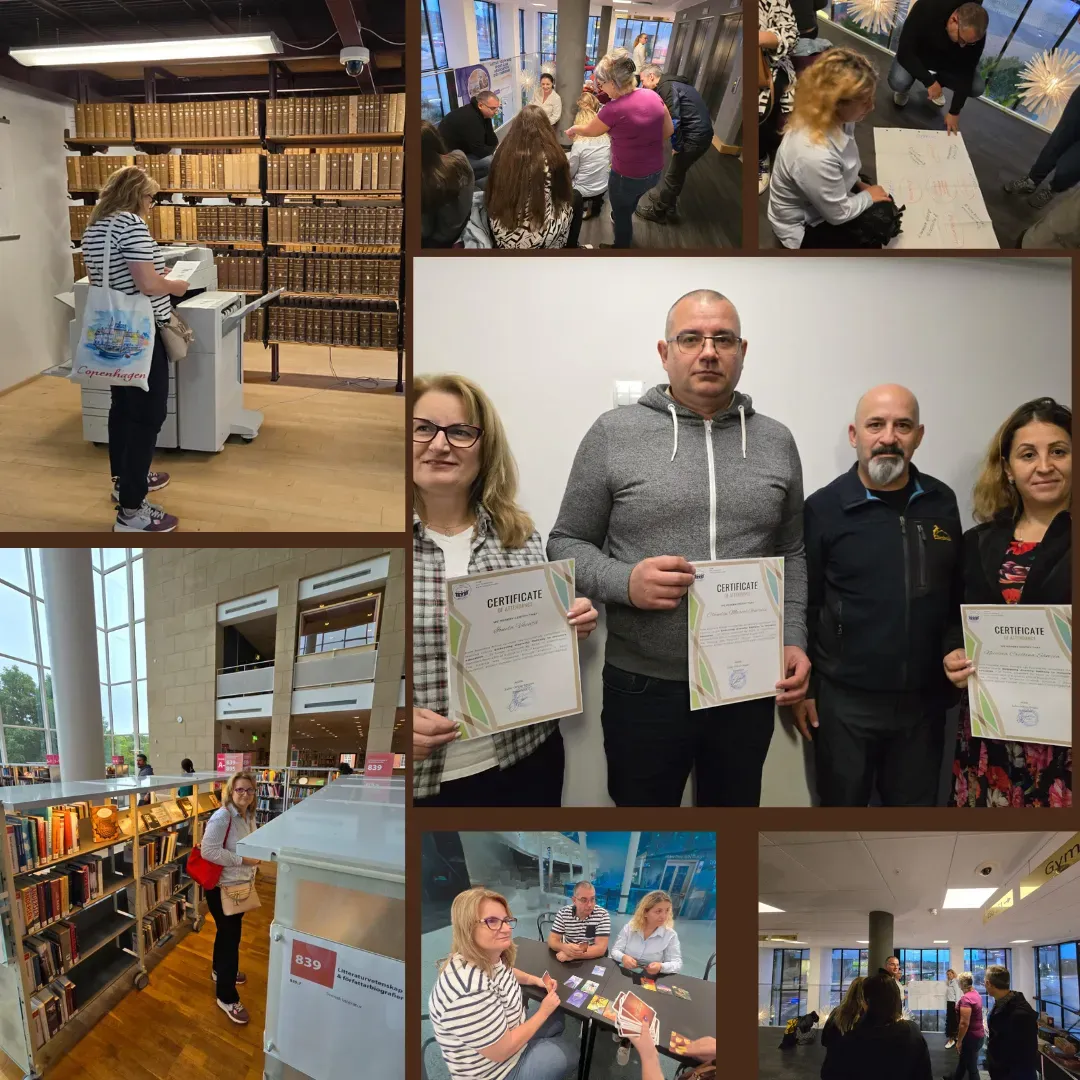
Between 23 and 27 August 2024, three trainers from Asociația Active Yourope attended the international course “Embracing Diversity: Pathways to Inclusive Education”, organised in Copenhagen, Denmark. The activity took place during the second year of Erasmus+ accreditation, project no. 2024-1-RO01-KA121-ADU-000230728. This valuable educational experience was a significant step in developing their skills for creating a more inclusive and equitable educational environment.
Objectives of the mobility
- a deep understanding of the concepts of diversity, inclusion and equity;
- developing skills for designing an inclusive curriculum;
- learning techniques for reducing bias in education;
- exploring strategies for supporting learners with diverse needs;
- improving intercultural communication skills and conflict management.
The course combined interactive workshops, case studies and practical activities, which addressed key topics such as:
Designing an inclusive curriculum
The trainers learned to integrate diverse perspectives into educational content, adapting materials to respond to learners’ different learning styles.
The core principles of an inclusive curriculum are: equity and accessibility; cultural diversity (the materials and examples included in the curriculum should reflect different cultures, traditions and points of view); flexibility (the design should allow content and teaching methods to be adapted to learners’ individual needs and learning styles); and relevance (the curriculum should be connected to learners’ everyday realities and address topics relevant to their lives).
Examples of inclusive strategies in the curriculum: integrating intercultural education, developing empathy by introducing examples that encourage empathy and an understanding of different perspectives, and promoting critical thinking.
Using technology for differentiated teaching
Interactive and collaborative tools were explored, such as IT applications for formative and summative assessment that support inclusive learning, as well as simulation platforms and interactive games such as:
- iThrive Games is a platform that develops educational games focused on empathy, conflict resolution and understanding diversity; for example, games such as “Diversity & Inclusion” enable learning through interactive scenarios.
- to explore gender stereotypes and their impact, an interactive activity from BBC Bitesize can be used: the Gender Equality Game;
- Virtual simulations (PhET Interactive Simulations) - a platform offering interactive simulations for science, mathematics and technology topics.
Conflict resolution and bullying prevention
In adult education, conflict resolution and bullying prevention are essential for creating a collaborative learning environment based on mutual respect and diversity. Unlike other forms of education, the challenges in adult education often involve differences in perspective, varied life experiences and communication barriers. Here is how these aspects can be addressed effectively.
Identifying conflict and bullying among adults
Conflicts in groups of adult learners can arise from various causes, including cultural differences, life experiences, learning styles or a lack of mutual trust. Course participants were trained to recognise:
- the signs of conflict: passive-aggressive behaviour, social exclusion, frequent disagreements or tension within the group;
- forms of bullying in adult education: critical or offensive comments, marginalisation or ignoring other learners’ opinions.
Strategies for preventing bullying among adults
Prevention begins with creating a safe learning environment in which adult learners feel valued and respected.
a. Establishing clear rules
- code of conduct: creating a set of jointly agreed rules that promote respect and collaboration;
- reinforcing the rules by example: trainers must model inclusive and respectful behaviour.
b. Promoting inclusion
- getting-to-know-you activities: organising “icebreaker” exercises that encourage learners to share personal experiences and build connections;
- embracing diversity: open discussions about respecting cultural, linguistic or personal differences.
c. Education for empathy
- organising activities that stimulate emotional understanding, such as role-play or personal stories, where learners can share their obstacles or challenges.
Techniques for resolving conflict in adult education
In adult education, conflicts can be more complex due to deeply rooted experiences and beliefs. Course participants learned effective methods for managing these situations:
a. Mediation and negotiation
- the role of the mediator: trainers can act as neutral mediators to facilitate dialogue between the parties;
- the steps of mediation:
- identifying the cause of the conflict;
- creating a safe space for expressing opinions;
- finding a common solution that meets the interests of both parties.
b. Active listening and reformulation
- teachers and learners are encouraged to practise active listening, paraphrasing the other person to ensure correct understanding;
- example: “From what you are saying, I understand that you want more time to work on this project. Is that right?”
c. Using conflict-resolution techniques
- the “win-win” technique: finding a solution in which both parties win;
- structured guidance: setting clear steps for resolving the conflict and monitoring their implementation.
Developing intercultural communication skills
Simulation exercises and group sessions helped participants understand intercultural dynamics and build a respectful learning environment.
Tackling prejudice
Through self-assessment and case studies, the trainers learned how to identify and reduce prejudice in the classroom.
This mobility gave the trainers a clear perspective on how the principles of diversity and inclusion can transform the educational process. Among the significant benefits are:
- creating an educational environment that promotes respect, collaboration and inclusion;
- developing a network of professionals in the field of inclusive education, for future support and collaboration;
- improving pedagogical methods to respond to learners’ diverse needs.