This course runs on request
There is no scheduled date right now. We run it for your group - you pick the dates and duration, we build the programme around them.
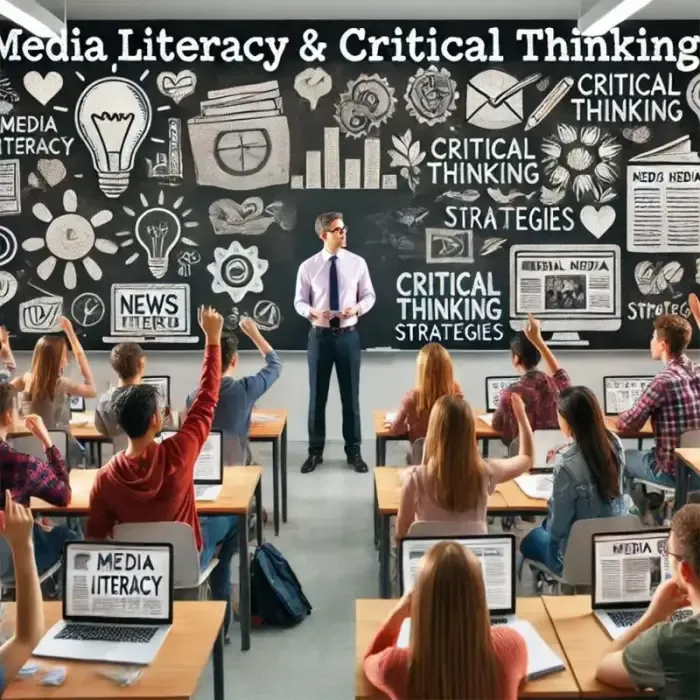
A practical Erasmus+ training course that equips teachers to bring media literacy and critical thinking into the classroom - from deconstructing media messages to recognising disinformation - grounded in the methodology of Romania's Center for Independent Journalism.
Typically covered by your school's Erasmus+ KA1 grant
Open sessions bring together teachers from across Europe. Courses without a scheduled date run on request - tell us when suits your school.
There is no scheduled date right now. We run it for your group - you pick the dates and duration, we build the programme around them.
Practical, classroom-ready skills you can apply the week you return.
Define media literacy and explain how media shapes attitudes, emotions and behaviour.
Use the core tools of media education to break down any media message, including misleading content.
Check for bias, distinguish fact from opinion and assess how reliable a source really is.
Design media-literacy activities and weave them into your existing curriculum.
Help students become responsible, confident media consumers and creators.
Share strategies and learn with fellow teachers for ongoing professional development.
Recognise the different forms of false and misleading information and help students counter them.
Digital education calls for adapted teaching techniques, sustained student attention and a different approach to assessment than the traditional classroom. This course equips teachers with the tools to guide students through a complex media landscape - with a clear focus on media literacy in the face of disinformation.
The aim is practical: to help teachers become confident in media literacy education, so their students grow into critical, informed consumers and creators of media.
This course draws on the practical experience Active Yourope gained delivering E.P.I.C. - Education for Correct Information (2024), a media-literacy programme that reached around 800 young people aged 14-19 in Dolj county, funded through the Efectiv Civic programme (developed by the Foundation for the Development of Civil Society with the Romanian-American Foundation). Its methodology is grounded in the curriculum of the Center for Independent Journalism (C.J.I.), one of Romania’s most experienced media-literacy institutions.
The course is highly interactive, built on collaborative learning and critical engagement with real content. It mixes in-person sessions, hands-on workshops where teachers analyse media messages with media-education tools, case studies, role-play and multimedia resources to suit different learning styles. Assessment combines practical demonstration of skills, reflective writing and contributions to group discussion - so teachers leave with both the understanding and the classroom-ready skills to teach media literacy effectively.
From foundations to a finished action plan for your classroom.
One simple number - and for most schools, your Erasmus+ grant takes care of it.
Includes the full training programme, materials, certificates and Europass support. No hidden costs.
Typically fully covered by your school's Erasmus+ KA1 grant
We run tailor-made closed-group editions for staff teams - your school chooses the dates, the duration and the emphasis, and we build the programme around you.
Plan a closed-group courseQuick answers before you write to us.
Teachers, trainers, educators and school staff from Erasmus+ programme countries can attend through their organisation's Erasmus+ KA1 project or accreditation. The grant your school receives is designed to cover the course fee, travel and subsistence - for most participants there is no out-of-pocket cost.
Every participant receives a certificate of participation from Active Yourope, and a Europass mobility certificate is granted if you request it.
The fee is 80 € per participant per day and covers the full training programme, materials and certificates. It does not cover accommodation or travel - those are covered by your grant's travel and individual support allowances.
No. The course starts from the fundamentals and is designed for teachers of any subject - you do not need a background in media or journalism.
Write to us and we reply within two working days.